Understanding the Cost of Custom Luxury Boxes — and How to Optimize It
For premium brands, a luxury box is much more than a container. It is part of the product experience — from the first visual impression to the moment the customer opens the box.
However, creating a premium handmade box does not necessarily mean accepting an unnecessarily high packaging cost.
As a professional custom luxury packaging supplier, we believe the key is not simply to reduce the specification, but to optimize the entire packaging solution.
What Makes Up the Cost of a Custom Luxury Box?
The final cost of a handmade rigid box is typically determined by several interconnected factors:
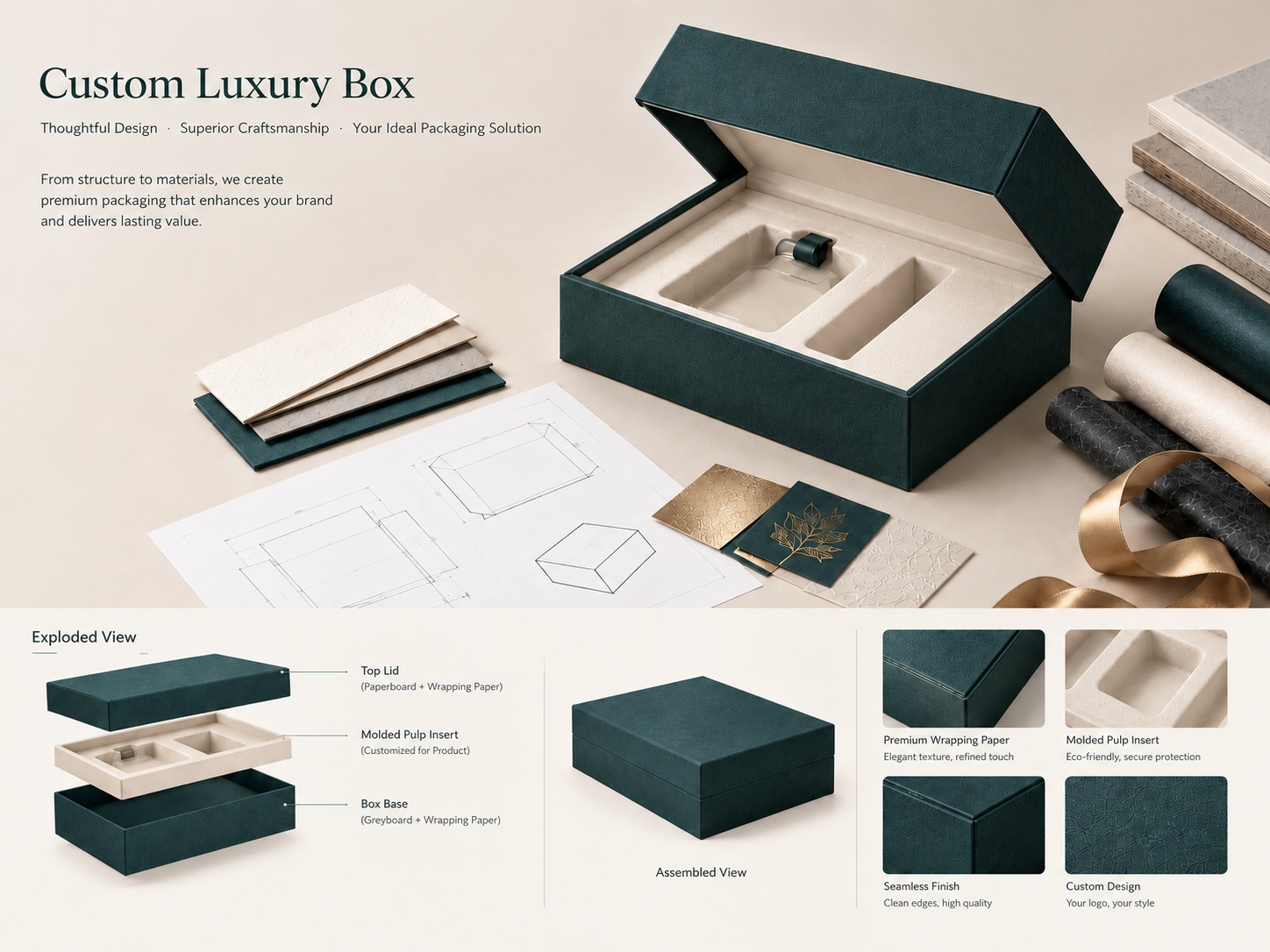
1. Box Structure and Dimensions
The structure is one of the first decisions that affects cost.
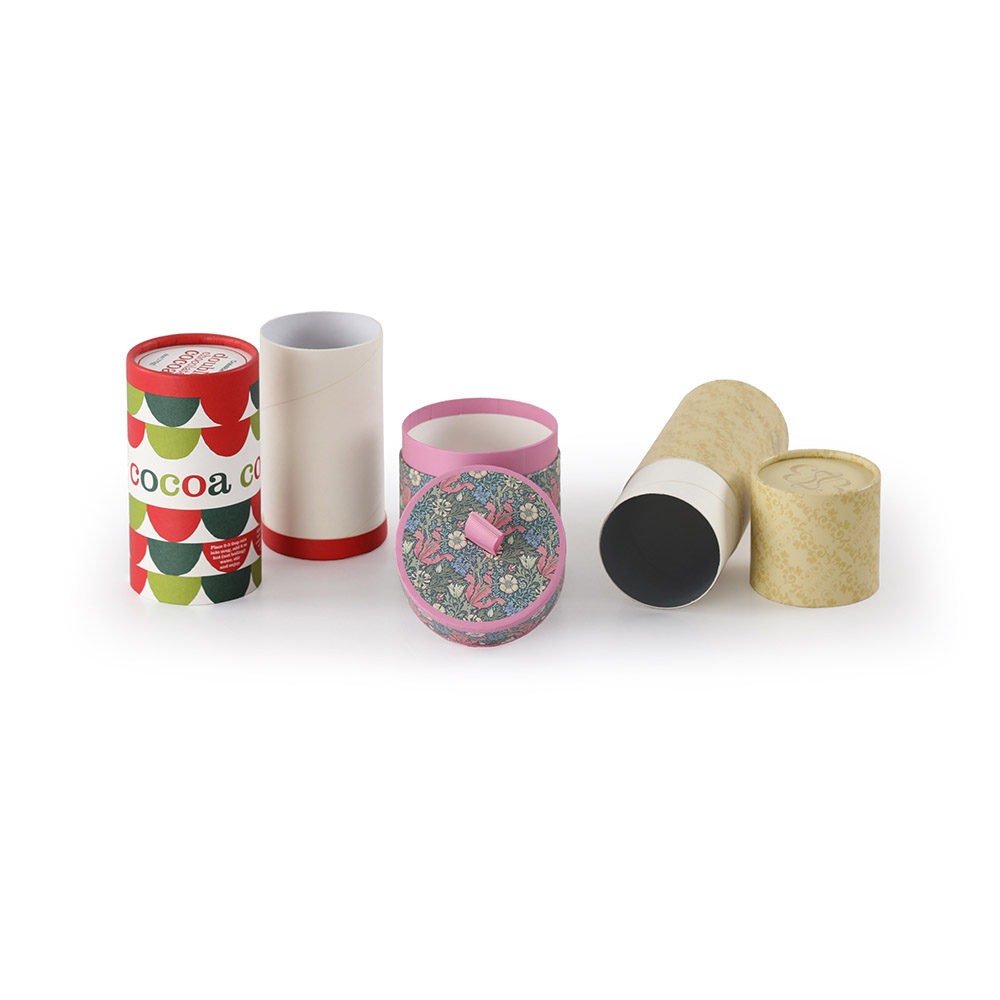
A simple two-piece lid-and-base box is generally more economical than a magnetic closure, drawer, or book-style box. More complicated structures require additional materials, components and manual assembly.
Dimensions are equally important. An oversized box consumes more greyboard and wrapping paper, increases production time and takes up more space during transportation.
The best principle is simple: design the box around the product, not around empty space.
2. Greyboard and Wrapping Materials
Greyboard provides the strength and rigidity of a premium box. Thickness, density and board quality all influence cost.
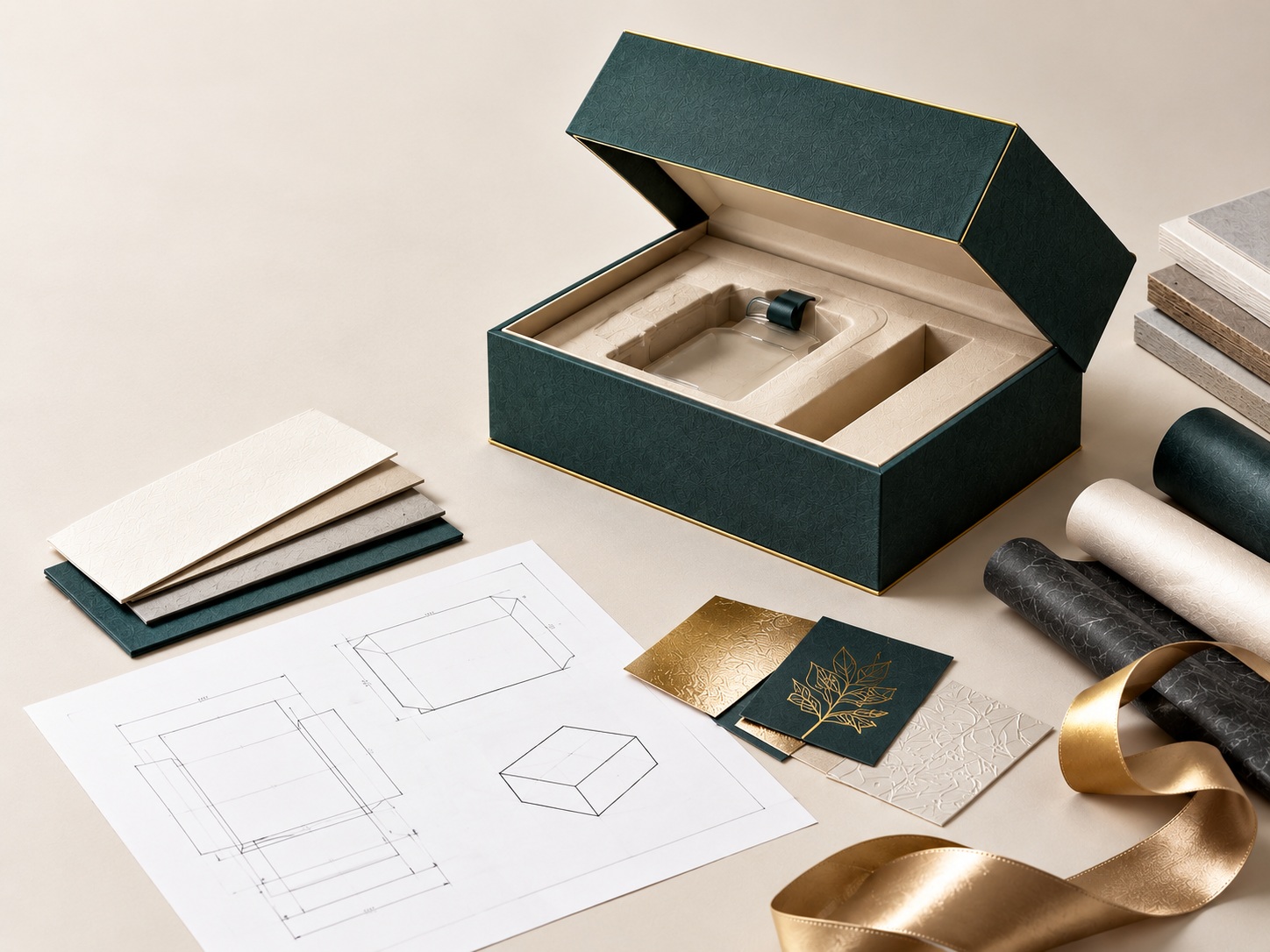
The wrapping material also has a significant impact. Standard coated paper can be highly cost-effective, while specialty papers, textured papers, leatherette, velvet and other premium materials can substantially increase the cost.
The objective should not be to select the cheapest material, but to select the right material for the required look, feel and performance.
3. Printing and Special Finishes
Luxury packaging often combines several decorative processes, including:
Offset printing
Matte or gloss lamination
Soft-touch coating
Foil stamping
Embossing and debossing
Spot UV
Silk-screen printing
Each additional process adds cost and production complexity.
In many cases, however, a carefully selected combination of one or two high-impact finishes can create a stronger luxury effect than using multiple expensive processes.
For example, a high-quality textured paper combined with a subtle foil-stamped logo may deliver a more sophisticated appearance than full-color printing combined with several additional finishes.
4. Inserts and Interior Presentation
The interior of a luxury box is just as important as the exterior.
Common insert solutions include:
EVA foam
PU foam
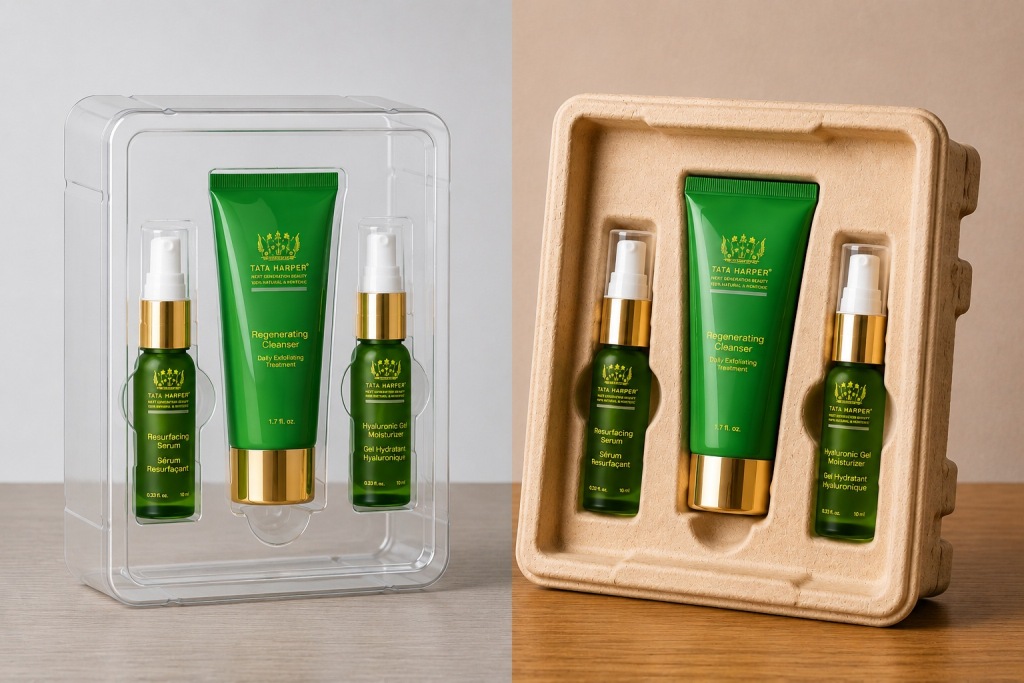
Molded pulp
Paperboard inserts
Velvet-covered inserts
Fabric-covered inserts
Thermoformed plastic trays
The right insert depends on the product's protection requirements, presentation requirements and sustainability goals.
A well-designed insert can also eliminate unnecessary material. Instead of using a thick foam block simply to fill space, structural engineering can be used to provide both product protection and visual presentation.
5. Handmade Assembly and Labor
Unlike standard folding cartons, luxury rigid boxes often involve multiple manual operations:
Board cutting
Corner forming
Paper wrapping
Edge folding
Gluing
Magnetic assembly
Ribbon installation
Insert assembly
Final inspection
For highly customized boxes, labor can become a significant part of the total cost.
This is why design for manufacturing (DFM) should be considered from the beginning of the project rather than after the artwork has already been finalized.
6. Packaging, Warehousing and Transportation
One frequently overlooked cost is logistics.
Rigid boxes are not normally shipped as flat as folding cartons, which means their cubic volume can have a significant impact on freight cost.
A small change in box dimensions can therefore affect not only material consumption, but also:
production cost + carton packing cost + warehouse space + freight cost.
For international projects, the most meaningful number is not always the factory unit price. Brands should evaluate the total landed cost.
How Can You Reduce the Cost Without Making the Box Look Cheap?
Cost optimization should never mean simply "use cheaper materials."
Instead, we recommend looking at the entire packaging system.
1. Optimize the Box Size
This is often one of the easiest and most effective ways to reduce cost.
Reduce unnecessary clearance around the product while maintaining sufficient protection.
A smaller box can reduce:
Greyboard consumption
Wrapping paper consumption
Printing area
Assembly time
Master carton size
Shipping volume
In other words, a few millimeters saved in the right places can create savings across the entire supply chain.
2. Choose the Right Structure
Ask an important question:
Does the product really need a magnetic box, drawer box or book-style box?
If a standard lift-off lid-and-base structure can deliver the required customer experience, it may provide a significantly better cost-performance balance.
For products that require premium presentation but also need to control freight costs, collapsible or foldable rigid-box structures can also be considered.
3. Use Premium Finishes Strategically
You do not need five finishing processes to create a premium appearance.
Instead, identify the one visual element that matters most.
For example:
Textured paper + foil logo
can create a strong luxury impression with relatively limited processing.
The same principle applies to embossing, debossing and spot UV: use them where they create the greatest visual or tactile impact.
4. Standardize Where Possible
If a brand has multiple SKUs, consider using the same or similar box dimensions wherever possible.
Standardization can help reduce:
Tooling requirements
Material waste
Setup costs
Production complexity
Inventory complexity
A professional packaging supplier should therefore look beyond an individual box and evaluate the entire product portfolio.
5. Optimize the Insert
The insert is another area with considerable potential.
Instead of automatically choosing EVA or PU foam, compare several solutions:
EVA / PU foam → premium protection
Molded pulp → sustainable and cost-efficient for suitable applications
Paperboard insert → lightweight and recyclable
Thermoformed tray → efficient for larger-volume projects
The best choice depends on the product, quantity, protection requirements and brand positioning.
6. Optimize for Shipping — Not Just Factory Price
A box that costs $0.30 less to manufacture but takes twice the shipping volume may actually be the more expensive solution.
For international customers, we recommend calculating:
Total Landed Cost = Product Cost + Packaging + Freight + Duties/Taxes + Other Logistics Costs
This provides a much more accurate comparison between packaging solutions.
7. Plan the Quantity Strategically
Low-volume production usually carries higher unit costs because tooling, setup and manual labor are distributed across fewer units.
If demand is predictable, increasing the production quantity or consolidating several SKUs may improve the unit economics.
However, producing too much inventory simply to obtain a lower unit price can create unnecessary warehousing costs.
The right solution is therefore a balance between:
unit price + inventory investment + warehouse cost + cash flow.
The Best Luxury Box Is Not Necessarily the Most Expensive One
A successful luxury packaging project is not about maximizing the number of materials and finishes.
It is about finding the right balance between:
Design + Function + Brand Experience + Manufacturing Efficiency + Logistics
A professional packaging supplier should be involved before the final design is locked.
At the development stage, we can evaluate:
Box structure
Material selection
Board thickness
Wrapping paper
Printing method
Finishing options
Insert design
Assembly process
Packing method
Shipping volume
This allows the packaging to be engineered around both brand experience and target cost.
Looking for a Better Cost-to-Value Packaging Solution?
Whether you are developing a luxury gift box, cosmetic packaging, jewelry box, electronics packaging or premium retail packaging, our approach is simple:
We do not simply manufacture the box you specify. We help engineer the packaging solution.
From structural design and material selection to handmade production, quality control and international delivery, our goal is to create a premium packaging experience while keeping the total cost commercially competitive.
Tell us your product dimensions, target quantity and target packaging cost. We can help you evaluate the structure and identify practical opportunities for cost optimization.
#custom luxury box cost #custom rigid box cost #how to reduce packaging cost